
"coffee yield per tree"
800 article(s) found

Brief introduction to the treatment method of grinding degree and baking degree of Vietnamese boutique coffee beans with light sour taste
Coffee cultivation in Vietnam covers an area of about 500000 hectares, of which 10% are owned by state-owned enterprises and farms, and 85% by farmers and landowners. The scale of the manor is small, usually 2-5 hectares, and the large manor is about 30-50 hectares, but the number is small. Vietnamese coffee ranks second in all agricultural products exported from Vietnam, second only to rice. Every year, about 300000 farmers are engaged in coffee cultivation, with a labor force of 600000.
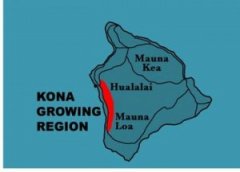
Kona Coffee of noble blood
Hawaii, a beautiful tropical island in the Pacific Ocean, not only produces beautiful scenery, but also produces the famous Kona coffee. Kona is also named after origin and can only be crowned with strictly certified coffee beans grown on the southwest coast of Hawaii's main island, 20 miles long and 2 miles wide, 150m ~ 750m above sea level, covering the slopes of the Hualalai and Mauna Loa volcanoes.

Flavor description of Yunnan Tieka Coffee Bean introduction to the characteristics of varieties produced in the manor area
The so-called new variety of Yunnan Tieka coffee beans actually refers to catimor (Katimo), which is a hybrid of timor and Arabica from the Roberta family. Compared with the old varieties, it lacks rich aroma and taste, and has a relatively shallow smell of grass and soil, but it has the advantages of resistance to diseases and insect pests, easy to manage, high yield and the highest yield per mu can reach 350kg.

Yield characteristics of Guatemalan Coffee beans
Professional baristas Please pay attention to the Coffee Workshop (Wechat official account cafe_style) the extra hard coffee beans here in Guatemala are full-grained, delicious and balanced, with which the pure full-bodied Guatemalan (Guatemala) coffee once enjoyed a reputation as the best quality coffee in the world, but its quality also declined for a time. What is gratifying, however, is that its reputation is gradually being restored. one
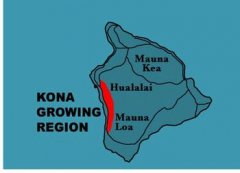
Kona Coffee of Noble pedigree American Coffee Kona
Hawaii, a beautiful tropical island in the Pacific Ocean, not only produces beautiful scenery, but also produces the famous Kona coffee. Kona is also named after origin and can only be crowned with strictly certified coffee beans grown on the southwest coast of Hawaii's main island, 20 miles long and 2 miles wide, 150m ~ 750m above sea level, covering the slopes of the Hualalai and Mauna Loa volcanoes.

Taste of Hawaiian Kona Coffee with suitable Climate introduction Fine Coffee beans Hawaiian Coffee beans
Kona coffee, Arabica, beautiful appearance, average neat bean shape, clear taste, medium mellow, slightly sour taste, strong aroma and long aftertaste. Kona coffee is divided into four grades, namely Extra Fancy, Fancy, Prime and Gr.No.1. Due to the low output and high production cost, the price of Kona in the market is catching up with the increasing demand for fine coffee.

Brief introduction of Hawaiian Kona Coffee
Following Cafe Review (Wechat official account vdailycom) found that Kona Coffee opened a small shop of its own. Kona Coffee tastes fresh, crisp, medium mellow, slightly sour, while full-bodied, with a long aftertaste. The most rare thing is that Kona coffee has a mixed aroma of wine, fruit and spice, like the colorful volcanic archipelago.

Kona coffee from Hawaii, the only coffee bean in the United States.
Hawaii, a beautiful tropical island in the Pacific Ocean, not only produces beautiful scenery, but also produces the famous Kona coffee. Kona is also named after origin and can only be crowned with strictly certified coffee beans grown on the southwest coast of Hawaii's main island, 20 miles long and 2 miles wide, 150m ~ 750m above sea level, covering the slopes of the Hualalai and Mauna Loa volcanoes.

Introduction to the characteristics of Coffee Flavor description and Grinding degree varieties in Costa Rica Yersalo Coffee
Coffee was introduced into Costa Rica from Cuba in 1729. Today, its coffee industry is one of the well-organized industries in the world, with a yield of 1700 kg per hectare. Costa Rica has only 3.5 million people but 400m coffee trees, and coffee exports account for 25 per cent of the country's total exports. The volcanic soil of Costa Rica is very fertile and well drained, especially in the central part.

An introduction to the flavor of Hawaiian coffee manor with a unique mellow flavor
Kona coffee has always been grown at home. At first, only men were allowed to work in the coffee garden, and later women joined in. This kind of family production of Hawaiians preferred to rely on the efforts of their families rather than hiring workers to work, so it was normal for Hawaiians to have eight or nine children at that time. Since then, there have been new immigrants from the Philippines and the United States.

Introduction of Coffee Bean Variety and characteristics of Fine Coffee Bean in Fire Phoenix Manor, Costa Rica
Coffee was introduced into Costa Rica from Cuba in 1729. Today, its coffee industry is one of the well-organized industries in the world, with a yield of 1700 kg per hectare. Costa Rica has only 3.5 million people but 400m coffee trees, and coffee exports account for 25 per cent of the country's total exports. The volcanic soil of Costa Rica is very fertile and well drained, especially in the central part.
Introduction to the unique and strong aroma of Costa Rican Fenghuang Manor Coffee Grinding degree
Coffee was introduced into Costa Rica from Cuba in 1729. Today, its coffee industry is one of the well-organized industries in the world, with a yield of 1700 kg per hectare. Costa Rica has only 3.5 million people but 400m coffee trees, and coffee exports account for 25 per cent of the country's total exports. The volcanic soil of Costa Rica is very fertile and well drained, especially in the central part.

An introduction to the coffee flavor and taste of the rich and mild Chateau Saint Roman, Costa Rica.
Coffee was introduced into Costa Rica from Cuba in 1729. Today, its coffee industry is one of the well-organized industries in the world, with a yield of 1700 kg per hectare. Costa Rica has only 3.5 million people but 400m coffee trees, and coffee exports account for 25 per cent of the country's total exports. The volcanic soil of Costa Rica is very fertile and well drained, especially in the central part.

Do katim coffee beans taste good? Katim coffee all the advantages and characteristics of cultivation? Katim is
Professional coffee knowledge exchange More coffee bean information Please pay attention to coffee workshop (Weixin Official Accounts cafe_style) Katim coffee beans taste good? Katim coffee all the advantages and characteristics of cultivation? Is katim a hybrid coffee variety? Coffee belongs to the evergreen shrubs of the genus Coffea of Rubiaceae. There are about forty kinds of plants under the branch of Coffea, among which coffee with commercial value is only
How to bake Katim? -Growing environment Producing area Flavor Description
1. Baoshan City State-owned Lujiang Farm planted 12.6 mu in March 1991. There was no shade in the area. Irrigation was carried out once in dry season. The management level and fertilizer application level were medium and high. The average yield per mu in 1993/94 was 75 kg, 350 kg in 1994/95 and 225 kg in 1995/96

Katim Coffee Bean Flavor description Grinding scale Variety production area treatment method Taste introduction
Katim coffee bean flavor description grinding scale variety production area treatment method taste introduction 1. Baoshan State-owned Lujiang Farm planted 12.6 mu in March 1991, the land was unshaded and irrigated once in the dry season. The level of management and fertilization was above and above. The results in 1993 showed that the average yield per mu was 75 kg in 1993, 350 kg per mu in 1994 and 1995, 225 mu in 1995 and 1996.

A brief introduction to the planting market price of Vietnamese boutique coffee beans with light sour taste
Coffee production in Vietnam has the following characteristics: (1) because there is no effective way to deal with fallen leaves, medium-grain coffee was selected as the main variety in the early 1980s. (2) based on the planting technology, the planting method of coffee was determined, that is, under the hot and humid climate in southern Vietnam, high density planting, large amount of irrigation, excessive fertilization and no shading trees were obtained.

Costa Rican Yerzaro Coffee Flavor description, Grinding degree characteristics, Variety Taste producing area
Coffee was introduced into Costa Rica from Cuba in 1729. Today, its coffee industry is one of the well-organized industries in the world, with a yield of 1700 kg per hectare. Costa Rica has only 3.5 million people but 400m coffee trees, and coffee exports account for 25 per cent of the country's total exports. The volcanic soil of Costa Rica is very fertile and well drained, especially in the central part.
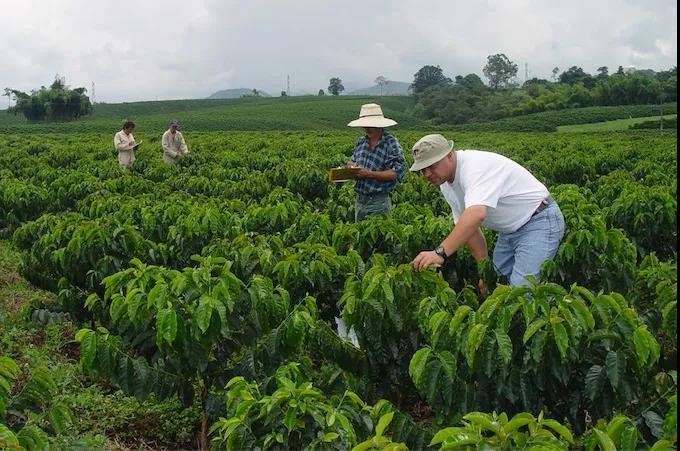
Will the rise in temperature caused by global warming affect the yield and quality of coffee beans in Colombia?
Professional coffee knowledge exchange more coffee bean information Please follow the coffee workshop (Wechat official account cafe_style) with global warming, Colombia, as the world's third largest coffee producer, will face the challenge of climate change. According to a study by the University of Illinois in the United States, coffee may no longer be grown in the low-altitude areas of Colombia. Coffee is widely grown in Colombia

A brief introduction to the planting situation of coffee growing areas in Vietnam with superior geographical location, climate and altitude
Two years ago, I read a survey report that Vietnam has overtaken Colombia in coffee bean production, ranking second in the world after Brazil. But it is planted with Robusta trees, and there is still a big gap in the quality of coffee beans compared with countries such as Colombia and Brazil. Vietnam's coffee production is growing. Among Vietnam's new export products, tea ranks first and coffee ranks first.